
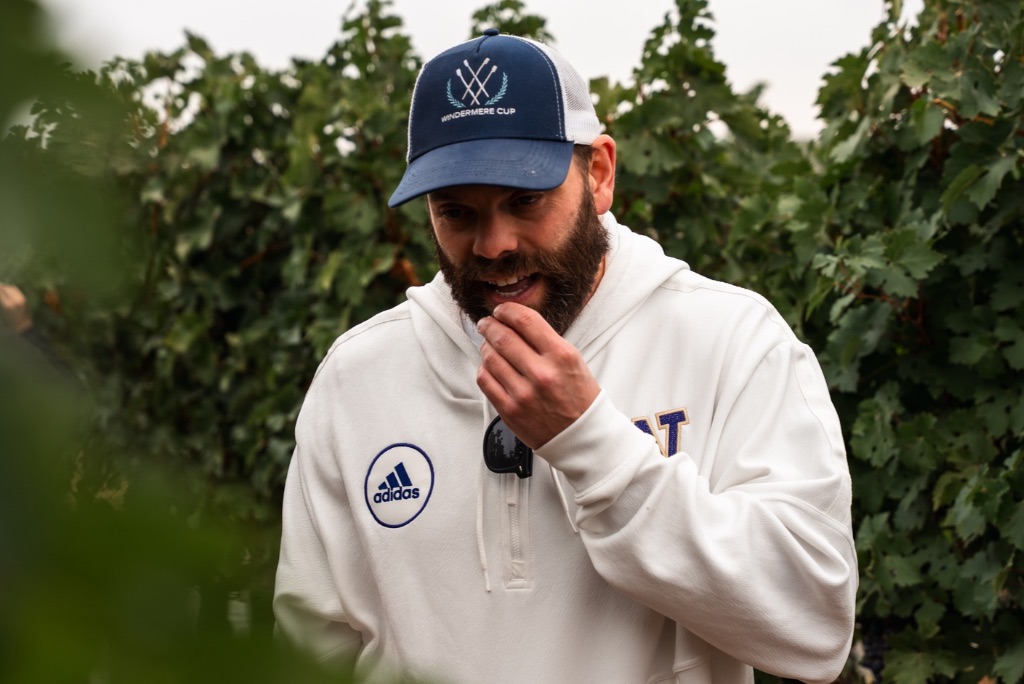
How Our Winemaker Decides When to Harvest
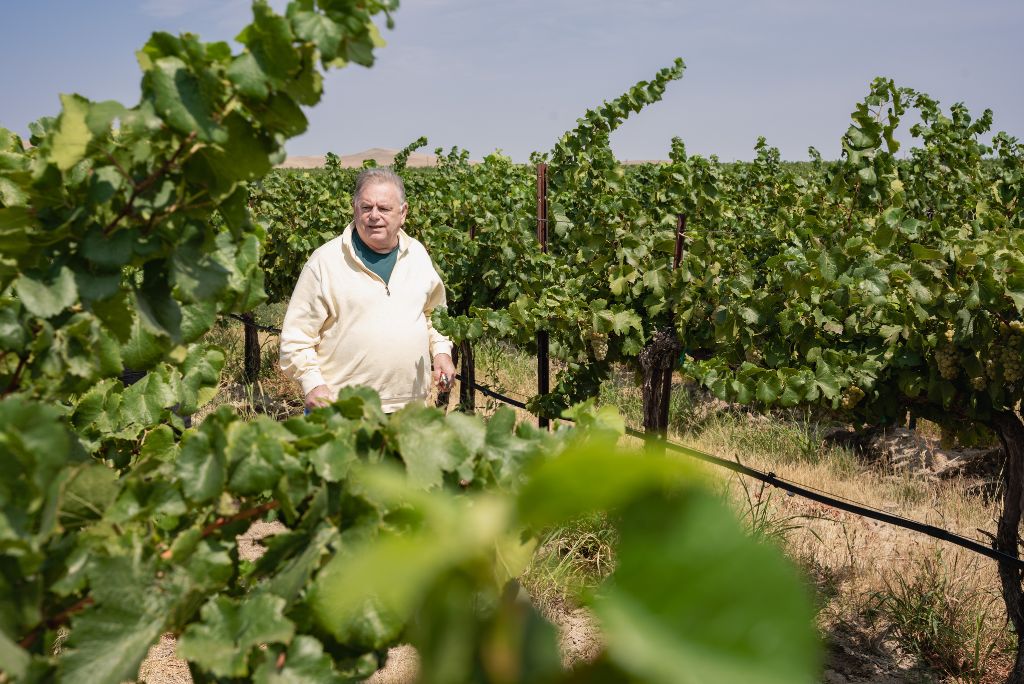
Mike Januik: A Washington Winemaking Pioneer
With four decades of Washington winemaking experience, Washington wine pioneer Mike Januik sat down for an interview with his son Donny to reflect on Chateau Ste. Michelle, Novelty Hill-Januik, Stillwater Creek Vineyard, and the grower relationships behind consistently high-quality Columbia Valley wines.
How Mike Januik Became a Washington Wine Pioneer
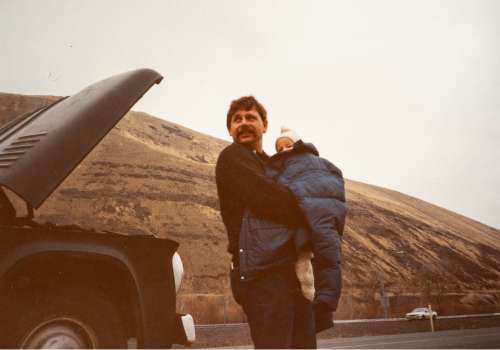
Back when Eastern Washington was mostly wheat fields, and Washington wine was just beginning to take root, Mike Januik already had the next generation along for the ride: baby Donald Januik, now General Manager at Novelty Hill-Januik.
I came to winemaking with some book learning behind me — a master’s degree in enology from the University of California, Davis. When I finished, I interviewed for jobs in Napa, but I was also approached by someone who had just started a winery in the Yakima Valley in Washington. I took that job, and a big part of the reason was family: my wife was raised in Seattle, and after six years away it felt like time to come home.
But it wasn’t only that. In the mid-1980s, Washington was a new frontier for wine. California had been making wine for generations — well established, settled. I wanted to be part of something that was just being discovered. That excited me more than stepping into a place where everything had already been figured out.
My first job was at a small winery in the Yakima Valley — about 5,000 cases, started by a surgeon who had planted grapes on the Wahluke Slope and needed to figure out what to do with the fruit. I started there right before the brutal freeze of 1984 and stayed three years. After a short detour to Idaho — where my son Andrew was born — I came back to Washington to work at the facility that became Snoqualmie Winery. I was making more wine than anyone in the state outside Chateau Ste. Michelle custom-processing for a lot of other people — around 5,000 tons a year.
Leading Quality Winemaking at Chateau Ste. Michelle
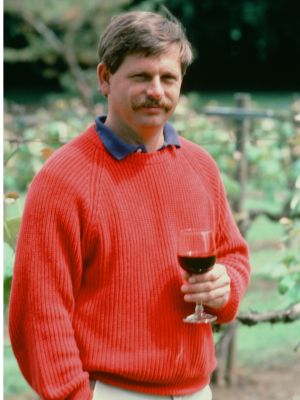
Mike Januik led Chateau Ste. Michelle winemaking for a decade.
In 1990, Chateau Ste. Michelle offered me their head winemaking position. They were interested in me partly because of the volume I was handling, and partly because they’d tasted the wines I’d made at Snoqualmie and liked them — and they were focused on improving their own quality as much as they could. I started in the summer of 1990 and stayed until right before harvest in 1999.
It was a great organization at the time, and it gave me experiences I’d never have had otherwise. I collaborated with the Antinori family for several years on a wine called Col Solare, and worked on a collaboration with Pichon Lalande in Bordeaux. I had the resources to ask real questions about quality — to chase down problems analytically rather than just accept the way things had always been done.
One example: cork taint. Early on, we were seeing as much as seven percent of bottles affected. We approached it methodically — at one point, our QA director was even using trained dogs to detect the compound in bales of cork. That particular method didn’t last, but the thinking behind it — questioning the traditional approach — is exactly what I love about the work. The cork industry eventually cleaned things up by screening for the compound before corks are ever used, and today a corked bottle is genuinely rare.
Starting Januik: A Personal Vision for Washington Wine
I left Ste. Michelle in 1999 because my wife and I both felt it was time to create something of our own. So we launched Januik Winery, and we’ve been doing it for more than twenty-five years now. Ste. Michelle was gracious about it — they offered me a two-year consulting agreement, and I think they genuinely wanted us to succeed.
Everyone assumed we’d move to eastern Washington, since that’s where the red wines are made. I spent three days a week over there for years. But we wanted to stay on the west side, near Seattle, for quality-of-life reasons — not a knock on eastern Washington at all, just where our lives are.
Novelty Hill, Stillwater Creek Vineyard & the Royal Slope
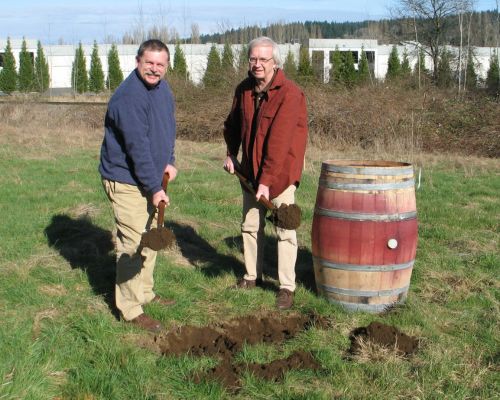
Mike Januik (L) and Tom Alberg at a groundbreaking ceremony for Novelty Hill-Januik in 2006.
In 1999, I met Tom Alberg, whose family owned property on the Royal Slope of eastern Washington that his father had purchased years earlier. He’d long thought about planting grapes there. I went and looked at the site with some viticulturist friends, and we all agreed it was a really promising piece of ground.
I helped get the vineyard planted that spring, and afterward I suggested to Tom that we make a little wine from it — some Sauvignon Blanc and Merlot to start. That was the beginning of Novelty Hill. We picked our first grapes from the site, now called Stillwater Creek, in 2002, and Novelty Hill and Januik have shared a home ever since.
People often ask about the difference between the two wineries. They’re separate, and the clearest distinction is the vineyard: Novelty Hill has its own estate vineyard, Stillwater Creek, so its wines are more an expression of that single site. In a normal year, a third to 40% of Novelty Hill’s fruit comes from Stillwater Creek. All of their single-vineyard wines are produced out of Stillwater. Januik draws on the broader set of grower relationships I’ve built across the Columbia Valley.
How Experience Shaped Mike Januik’s Winemaking Philosophy
My philosophy around Washington winemaking has shifted with experience. In the early years, we picked our reds much earlier — routinely around 22 degrees Brix. Today we’re closer to 24 or 24-and-a-half. Most winemakers came to the same conclusion: waiting longer gives you a better-developed phenolic profile and a much nicer structure. I prefer the term phenolics to tannins, because it covers a wider range of compounds, and those compounds mature in a far more pleasing way with a little more time on the vine.
In the cellar, the most important step for a red wine is fermentation — specifically maceration. You want it to bring out the best in the wine without pushing it so far that it turns hard and dry. A lot of that is simply experience. At Ste. Michelle I was overseeing six or seven hundred red fermentations a year and tasting through them personally. You learn far more at that volume than from a handful of wines.
I also tend to blend late. A lot of people blend early because that’s how it was traditionally done in Bordeaux. But blending early takes away your choices. If you wait until the wines have developed in barrel — fourteen to sixteen months — you simply have more options and make better decisions.
Oak, Balance, and the Style Behind Januik’s Winemaking
There were years early on when we tried 100% new French oak. We were interested in trying everything. Looking back, that’s more oak character than I want now. For our Januik reds we’re closer to 40% new French oak today. For most of our whites — Roussanne, Viognier, the Sauvignon Blanc-based blends — we use largely neutral oak, because what we want there is lees contact and barrel stirring, not oak flavor.
Chardonnay is the exception, with about a third new French oak — and even then it isn’t an oaky wine, partly because of the specific barrels I’ve sought out over the years that work well with Chardonnay. Choosing the right cooper matters as much as the percentage.
Tastes have changed — mine and the public’s. People generally aren’t looking for as much oak as we were putting into wines twenty years ago, and that’s fine. My own palate today isn’t what it was forty years ago either. Even in Bordeaux, you now see restaurants pouring wines from outside the region, partly because not everyone wants that heavy new-oak character anymore.
Grower Relationships Behind Award-Winning Washington Wines
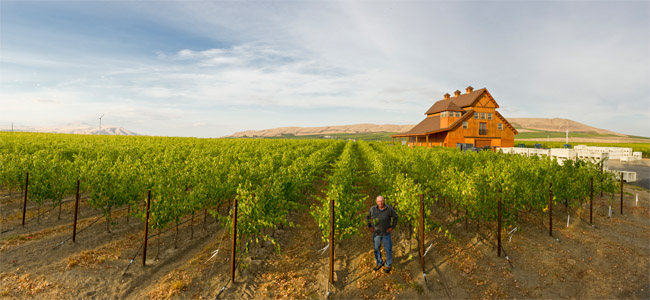
Red Mountain’s Ciel du Cheval Vineyard delivers the depth, structure, and character that make this site unforgettable.
So much of what ends up in the bottle comes down to relationships with growers. Over the years I’ve been able to get fruit from vineyards that many people wanted but couldn’t get — and the reason was the length of the relationship. I’ve worked with some growers since the mid-1980s.
A good example is the fruit that became Champoux Vineyard. I first used it in 1987, when it was Mercer Ranch, and I knew Paul Champoux from that time — so when we started our own winery, I could get that fruit when others couldn’t. Cold Creek is another: I made the Chardonnay there for years at Ste. Michelle, and when I left I was given the opportunity to keep buying that fruit. I thought the white grapes from that site were exceptional, so I made our first Cold Creek Chardonnay under the Januik label in 1999 — and we’ve made it every year since. That kind of consistency, year after year, is exactly what makes a wine worth bottling as a single vineyard.
On Red Mountain I work closely with the Shaw family, whose vineyards — including Quintessence — are managed by Marshall Edwards, someone I first knew at Ste. Michelle when he managed Cold Creek. Quintessence is the source of a lot of our reserve-level wines, and it’s good year after year. I put it right at the top of the vineyards I love. I’ve also worked with Ciel du Cheval for many years, one of the first vineyards planted on Red Mountain.
Sauvignon Blanc, Canopy Management and Washington Wine Quality
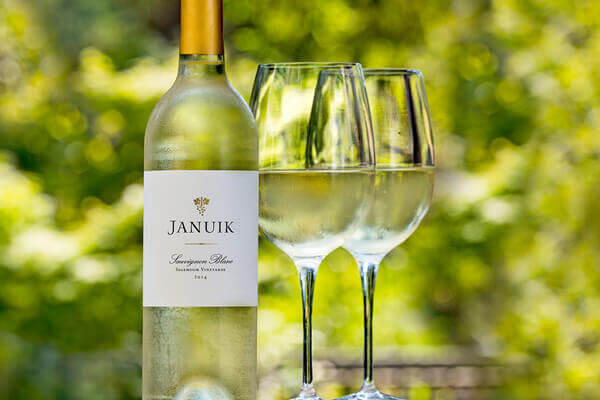
What I look for in Sauvignon Blanc is great fruit character — tropical fruit, citrus, guava, melon. That comes from careful canopy management. When I started working with the variety in Washington in the 1980s, a lot of it smelled green and vegetal, like green beans or canned corn, because canopies grew unchecked and you couldn’t even see the clusters.
Over the years we learned that controlling the canopy — giving the clusters indirect sun exposure — produced a completely different, cleaner, fruit-driven style. That’s the wine we make today. Once, a sales colleague at Ste. Michelle asked if we could recreate the old vegetal style for some customers in the UK who still liked it. We tried, and we couldn’t — which is fine, because that isn’t a style I care to make anyway.
Washington Wine’s Evolution, Through Mike Januik’s Eye
Washington wines are closer to Old World wines than California’s. California reds are often big and jammy — fruit-forward, and if that’s the style you love, that’s where to go. Washington tends toward more structure and restraint. I’ve always had an affinity for Old World wines myself — Bordeaux, Burgundy, Italy, and especially Spain, which makes beautifully built wines at real value.
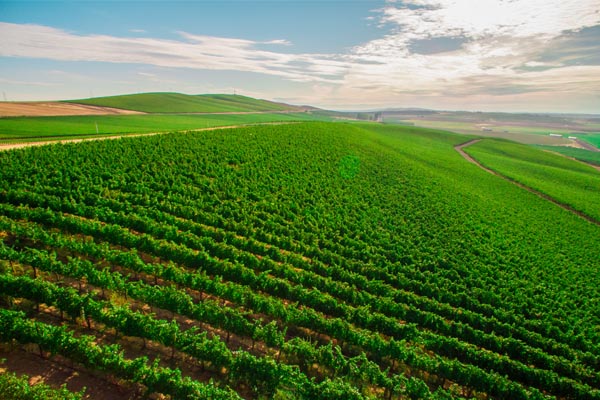
In 2000, Novelty Hill’s owners hired Mike Januik to advise them on the planting of Stillwater Creek Vineyard on the Royal Slope of the Frenchman Hills.
The Columbia Valley has changed enormously. When I started, there were essentially two AVAs — Columbia Valley and Yakima Valley. Today there are over two dozen. Whole regions have come into their own: Walla Walla had very little planted when I began, and the Royal Slope and Wahluke Slope have developed since. When I made my first Washington wine in 1984, the only vineyard on the Wahluke Slope was the one belonging to the winery I worked for. Now there are thousands of acres planted.
Advice for a New Wine Drinker
If I could tell a new wine drinker one thing about our wineries, it’s that our wines are consistently well-made. We won’t bottle a wine unless we think it’s good enough to put in front of someone. And we hold to a style we believe in — if you liked our Januik Columbia Valley Cabernet five or ten years ago, the current vintage should feel familiar. It wouldn’t be much fun to do it any other way; it would be like making widgets.
And as for how to approach wine in general? Just have fun with it.